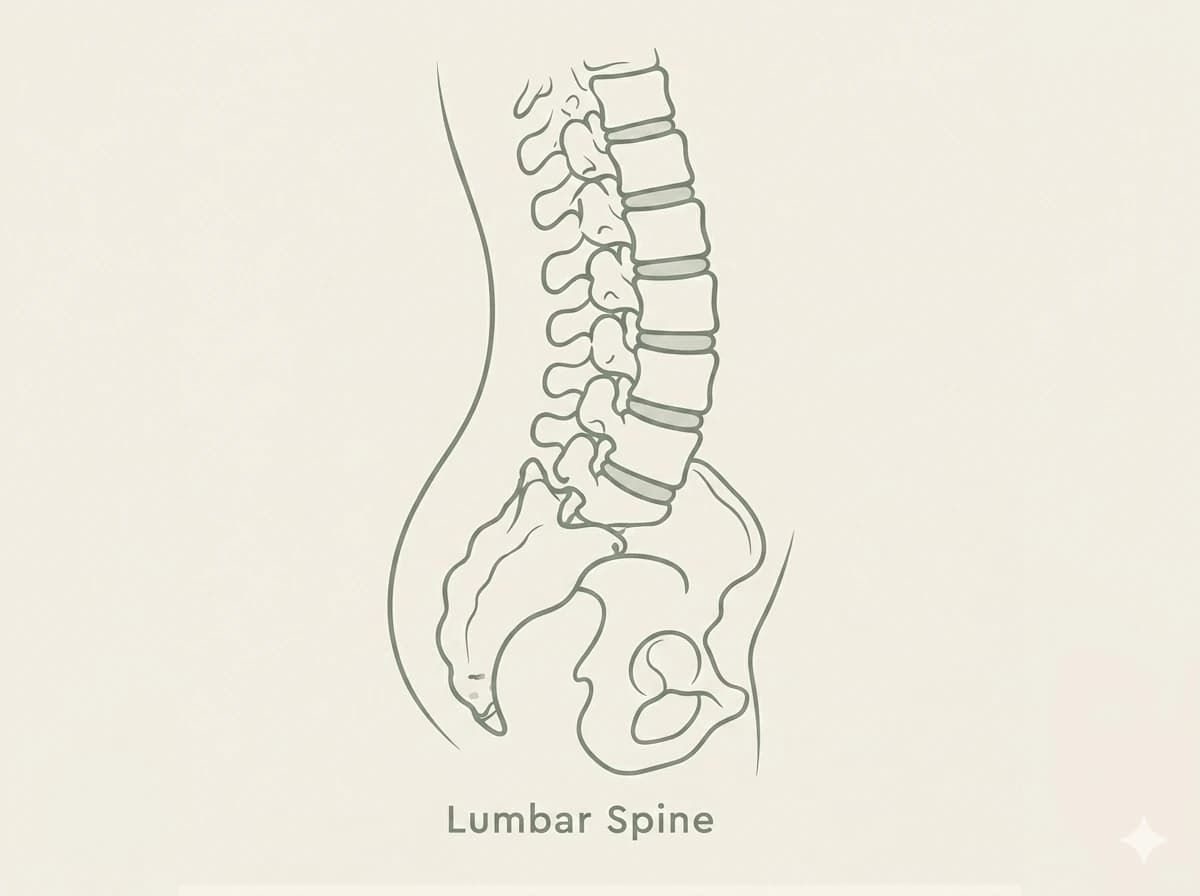
Slip Disc (Lumbar Disc Herniation)
Understand your condition, explore treatment options, recover safely and prevent recurrence.
This page provides educational information and is not a substitute for consultation with a qualified spine surgeon. It does not replace your own doctor's evaluation of your specific symptoms and MRI findings.
What Is a Slip Disc?
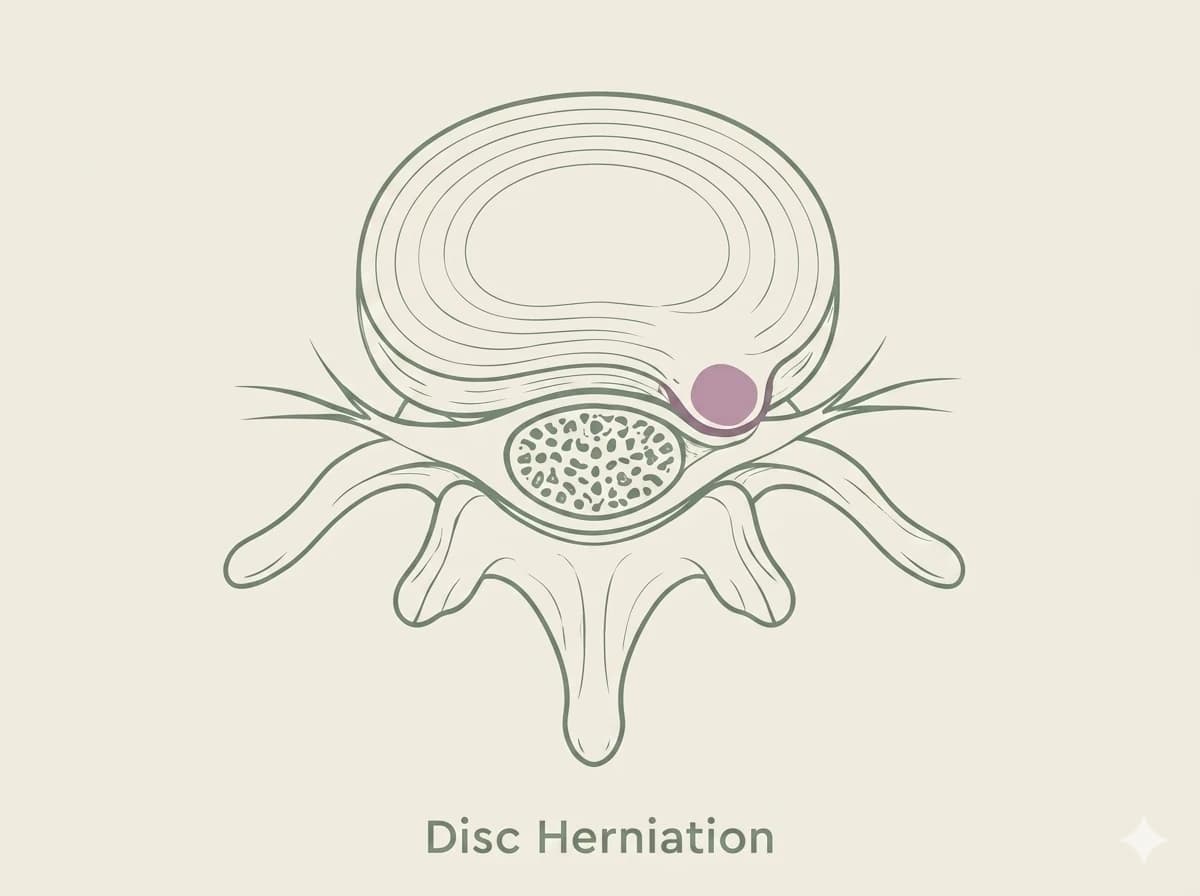
Disc Anatomy
Each disc between your vertebrae has two real, distinct parts: a tough, fibrous outer ring called the annulus fibrosus, and a soft, gel-like center called the nucleus pulposus. Together, they act as shock absorbers, letting your spine bend and twist while cushioning the vertebrae above and below.
Discs have a genuinely limited blood supply, especially in adulthood — most of their nutrition arrives by slow diffusion rather than direct blood flow. This is one real, biological reason discs are less able to repair themselves compared to many other tissues, and why age-related change over years is a normal, expected part of how your spine ages, not a sign something has gone wrong on its own.
"Slip disc" is the common, everyday term for what your doctor calls a lumbar disc herniation — the disc doesn't actually slip out of place; rather, its inner material pushes outward through a weakened or torn outer ring, sometimes pressing on a nearby nerve.
Disc Degeneration
Disc degeneration is the real, gradual process of a disc losing water content, height, and elasticity over years — a genuinely normal part of aging that nearly everyone experiences to some degree, most of it without ever causing symptoms.
A weakened, degenerated disc is more prone to developing the tears in its outer ring that allow a herniation to occur — which is one real reason disc herniation becomes more common with age, though it can happen at any adult age, including in otherwise healthy, physically fit younger adults after a specific strain or injury.
Disc Bulge
A disc bulge is the mildest real stage — the disc extends outward symmetrically, but the outer annulus remains genuinely intact. Real, current spine nomenclature standards describe this as often representing early degenerative change, and it is frequently found on the MRI of people with no back pain at all.
A real, honest and important point: real, published research shows disc bulges have a comparatively lower likelihood of spontaneous resorption than more severe herniation types — around 13% by some published estimates — though this doesn't mean a bulge is untreatable; most people with a symptomatic bulge still improve well with conservative treatment.
Disc Prolapse (Protrusion)
Disc prolapse — also called protrusion — is a real, more advanced stage than a simple bulge. Here, the nucleus pushes against a genuinely weakened annulus, creating a focal, localized outpouching, with the base of the displacement wider than the portion pushing outward. The annulus is weakened but has not fully torn through.
A protrusion is more likely to press on a nearby nerve root than a simple bulge, since the displacement is more focal and pronounced — this is often the real, specific stage associated with the classic sciatica pattern covered in the Common Symptoms section below.
Disc Extrusion
Disc extrusion is a real, more significant stage: the nucleus breaks fully through the annulus, though the displaced material typically remains connected to the parent disc. Real, current spine nomenclature distinguishes this from a protrusion by shape — in an extrusion, the base of the displaced material is narrower than the dome that has pushed through.
Here is a real, genuinely reassuring, evidence-based fact that surprises many patients: extrusions, despite sounding more severe, are actually more likely to resorb naturally over time than a simple bulge — real, published research attributes this to the body's immune system recognizing the extruded material as foreign tissue and actively breaking it down, a real process working in your favor.
Disc Sequestration
Disc sequestration is the most advanced real stage — a fragment of disc material separates completely from the parent disc and migrates within the spinal canal, sometimes affecting a nerve root at a different level than where the original disc sits.
Despite being the most severe displacement type, real, published research shows sequestered fragments have the highest real likelihood of spontaneous resorption of any herniation stage — estimates around 96% in some published data — since a fully detached fragment is even more readily recognized and broken down by your body's own immune response. This is a real, genuinely important, reassuring piece of evidence worth understanding directly: the more severe the imaging description sounds, the more likely, on average, your body is to resolve it without surgery.
Why Does It Happen?
Ageing
Age is the single strongest real risk factor for disc herniation — as discs naturally lose water content and elasticity over years, they become genuinely more prone to the tears that allow herniation to occur. This real process typically becomes more relevant from the 30s onward, though it varies significantly between individuals.
Heavy Lifting
Lifting with a rounded, flexed back rather than using your legs places real, significant, concentrated pressure on the front of the disc, genuinely increasing herniation risk, particularly when combined with twisting at the same time. This is exactly why safe lifting technique is covered in detail in the Preventing Recurrence section of this page.
Poor Posture
Sustained poor posture — particularly prolonged forward-flexed sitting — increases real, cumulative disc pressure over hours and years, contributing to the gradual wear that makes a disc more susceptible to herniation, even without one single, dramatic triggering event.
Smoking
Smoking is a real, well-established, independent risk factor for disc herniation — it reduces blood flow to spinal tissues (already limited to begin with) and is associated with accelerated disc degeneration, genuinely increasing herniation risk beyond its other well-known health effects.
Obesity
Excess body weight increases real, mechanical load on the lower spine specifically, a genuine, established contributor to both disc degeneration and herniation risk — real, current guidance supports that even modest, sustainable weight reduction can meaningfully reduce this cumulative load.
Genetics
Family history is a real, recognized contributing factor — some research suggests genetics may play a larger real role in disc degeneration and herniation risk than traditionally appreciated, potentially explaining why some people develop significant disc problems relatively young despite few other real risk factors.
Occupational Factors
Real, occupational risk factors include jobs involving frequent heavy lifting, prolonged sitting or standing, whole-body vibration (like professional driving), and repetitive bending or twisting — genuinely relevant across a wide range of occupations, from manual labor to long-haul driving to desk-based work with poor ergonomic setup.
Sports
Certain sports carry a real, elevated association with disc-related injury — activities involving repetitive spinal loading, twisting, or high-impact forces (weightlifting, contact sports, certain gymnastics movements) — though real, current sports medicine guidance emphasizes that appropriate technique and gradual conditioning meaningfully reduce this risk rather than requiring athletes to avoid these activities entirely.
Common Symptoms
Low Back Pain
Low back pain is often the real, first symptom of a slip disc, sometimes starting suddenly after a specific movement (like lifting or twisting), and sometimes building gradually over days. The pain is often worsened by sitting, bending forward, coughing, or sneezing — all movements that genuinely increase pressure on the affected disc.
Sciatica
Sciatica describes pain radiating along the sciatic nerve's path — from the lower back or buttock, down the back or side of the thigh, sometimes continuing into the calf and foot. This real, distinctive pattern occurs when herniated disc material presses on one of the specific nerve roots that form the sciatic nerve, most commonly at the L4-L5 or L5-S1 disc levels.
Leg Pain
Leg pain from a slip disc typically follows a real, specific nerve pathway rather than being generally diffuse — the exact real pattern (which part of the leg and foot) depends on which specific nerve root is affected, information your doctor uses to help localize the affected disc level even before imaging.
Numbness
Numbness — reduced or absent sensation — in a real, specific area of the leg or foot, following the same dermatome (skin area supplied by a specific nerve) as any accompanying pain, is a real, common symptom when a nerve root is compressed significantly.
Tingling
Tingling or "pins and needles" sensations, often in the same real, specific distribution as any numbness or pain, reflect irritation of the affected nerve root — a genuinely common, though not universal, accompanying symptom.
Weakness
Weakness in specific leg or foot muscles can occur when a nerve root is significantly compressed, affecting the muscles that specific nerve controls. Real, current guidance treats new or progressive weakness as more clinically significant than pain alone, and it's specifically covered as a red flag and surgical consideration elsewhere on this page.
Walking Difficulty
Difficulty walking normally can result from a combination of pain, weakness in specific muscles needed for a normal gait, or — in the specific case of foot drop (covered in the Red Flags section) — an inability to lift the front of the foot properly, causing a real, distinctive dragging or high-stepping gait pattern.
Red Flags — When Urgent Medical Attention Is Required
⚠ Seek urgent medical attention immediately — the same day, not a routine appointment — if you have:
- Loss of bladder control, or new difficulty starting urination
- Loss of bowel control
- Progressive weakness — leg weakness that is getting worse over hours or days
- Foot drop — new difficulty lifting the front of your foot, causing your toes to catch or drag while walking
- Saddle numbness — numbness in the area between your legs, inner thighs, or around your genitals
- Fever combined with severe back pain
- A history of cancer, alongside new or worsening back pain
- Night pain that is severe and doesn't ease with rest or position changes
These specific red flags can indicate cauda equina syndrome — when the bundle of nerves at the bottom of your spinal cord is severely compressed — or, less commonly, a spinal infection, fracture, or other serious cause. Cauda equina syndrome specifically deserves real, direct emphasis: it is rare, but it is the one situation in routine slip disc care where "wait and see" is genuinely the wrong choice. If you or someone you know has the real combination of leg weakness, saddle numbness, and bladder or bowel changes, go to an emergency department directly — do not wait for a scheduled appointment, since emergency surgery within a real, narrow window can meaningfully prevent permanent nerve damage.
Foot drop specifically warrants its own real, direct mention: it most commonly results from compression of the L5 nerve root, and while it can sometimes improve significantly with timely treatment, real, published case data shows outcomes are generally better the sooner it's addressed — a genuine, real reason not to wait if you notice this specific symptom developing.
Diagnosis
Medical History
Your doctor starts with a real, detailed history — when your symptoms began, whether there was a specific triggering movement, the exact real pattern of any leg pain, numbness, or weakness, and screening directly for the red flags described earlier on this page. This history alone often provides real, strong clues about which disc level is likely affected, even before any physical exam or imaging.
Clinical Examination
A real, physical examination includes testing reflexes, muscle strength in specific leg and foot muscle groups, and sensation along specific nerve pathways. A real, classic test is the straight leg raise — lifting your leg while lying down reproduces sciatic-type pain in many people with a genuine disc-related nerve compression, a real, useful clinical sign supporting the diagnosis before imaging confirms it.
MRI
MRI is the real, gold-standard imaging test for a suspected slip disc, directly visualizing the disc, nerve roots, and spinal canal in detail no other test can match. Real, current guidance reserves MRI for red flags, significant or persistent symptoms beyond the usual expected recovery window, or when surgery is being considered.
A real, important, honest point: disc bulges and even herniations are genuinely common findings on the MRI of people with no back pain at all, with prevalence increasing with age. This is exactly why your doctor interprets your MRI alongside your actual symptoms and exam findings, not as a stand-alone diagnosis.
X-rays
A standard X-ray shows bone alignment and disc space narrowing but cannot show a herniated disc directly, since discs themselves aren't visible on X-ray. Real, useful applications include checking for other real causes of back pain (like a fracture or spondylolisthesis) that might otherwise be mistaken for a disc-related problem.
CT Scan
A CT scan can show disc herniation, though generally less clearly than MRI for soft tissue detail — real, current use is typically reserved for patients who cannot have an MRI (for example, due to certain implanted metal devices), or for detailed bony evaluation before surgery.
When Imaging Is Needed
Real, current guidance recommends imaging when red flags are present, when symptoms are significant or persistent beyond about 4-6 weeks of appropriate conservative treatment, or when surgery is genuinely being considered as a real, immediate next step.
When Imaging Is Not Required
For most people with new, uncomplicated back or leg pain without red flags, real, current guidelines specifically recommend against early imaging, since it doesn't improve outcomes and can occasionally lead to unnecessary treatment based on incidental findings unrelated to your actual symptoms. Most people improve within the same real, expected window whether or not early imaging is performed.
Non-Surgical Treatment
Activity Modification
Real, current guidance favors modifying — not eliminating — activities that clearly worsen your specific symptoms, while staying otherwise reasonably active. Complete bed rest is genuinely not recommended, since real, published evidence shows it can slow recovery rather than support it.
Walking
Walking is one of the most consistently recommended activities for slip disc recovery — real, current guidance favors starting with whatever distance feels comfortable and increasing gradually, rather than a fixed target, and generally favors walking over prolonged rest even during an active flare.
Pain Medicines
NSAIDs (like ibuprofen) are real, commonly recommended first-line options for pain and inflammation, used for defined periods during flares. Real, current guidance favors limiting continuous, long-term use given established gastrointestinal and cardiovascular considerations.
Physiotherapy
Real, current evidence strongly supports physiotherapy for slip disc recovery — targeted exercises, education, and gradual progression genuinely help most patients recover well without surgery. CARENYX's own reviewed Exercise Library includes real, specific, appropriate options directly relevant to disc-related pain: Cat-Camel and Lumbar Mobility for gentle mobility, Standing Extension for many disc-related presentations, and Bird Dog, Dead Bug, and Bridge for core stabilization once the acute phase settles.
Nerve Pain Medicines
For nerve-related pain (sciatica) specifically, real, current evidence supports certain nerve-pain-specific medications for some patients, prescribed and monitored directly by your doctor — genuinely different from ordinary pain medication, since they target nerve-related pain signaling specifically.
Lifestyle
Not smoking, maintaining a healthy weight, and managing stress all genuinely support recovery and reduce real, future recurrence risk — covered in complete, practical detail in the Preventing Recurrence section of this page.
Weight Reduction
Excess body weight increases real, mechanical load on the lower spine — real, current guidance supports that even modest, sustainable weight reduction can meaningfully reduce this cumulative load, genuinely supporting both recovery and long-term prevention.
Epidural Injections
An epidural steroid injection delivers anti-inflammatory medication directly near the affected nerve root, and can provide real, meaningful relief for some patients during a significant flare, particularly to help tolerate physical therapy. Real, current guidance frames this as a supportive, time-limited tool within a broader treatment plan, not a stand-alone cure.
Expected Recovery Timeline
Real, published data shows the large majority of people with a slip disc improve significantly with conservative treatment within 6-12 weeks, though some improvement often begins within the first few weeks. Real, current evidence also shows continued, gradual improvement can occur over several months as herniated material naturally reabsorbs, particularly for extrusions and sequestrations, which — as covered earlier — often resorb even more readily than milder bulges.
When Is Surgery Required?
Surgery is reserved for a real, smaller group of patients — most people with a slip disc improve without it. Real, current indications for surgery include:
Persistent, severe pain that hasn't responded to a genuine trial of conservative treatment, typically 6-12 weeks. Significant or worsening weakness in the leg or foot. New foot drop, given real, published evidence that outcomes are generally better with more prompt treatment. Cauda equina syndrome, which needs emergency surgery, not elective scheduling. Failure of conservative treatment more broadly — persistent, significant symptoms genuinely limiting your daily function despite appropriate, sustained non-surgical care.
A real, important point: the decision to proceed with surgery is always individualized, weighing your specific symptoms, imaging findings, and how significantly your daily life is affected — not a fixed formula applied identically to everyone.
Surgical Options
Microdiscectomy
Microdiscectomy is the real, long-standing, most common surgical approach for a symptomatic slip disc — removing the herniated portion of disc material pressing on a nerve root through a small incision, using an operating microscope for precision. Real, published outcomes show good-to-excellent results for the large majority of appropriately selected patients.
Endoscopic Discectomy
Endoscopic discectomy uses a real, even smaller incision and a specialized camera (endoscope) to remove the herniated disc material, genuinely offering the potential for less tissue disruption and a faster initial recovery for appropriately selected patients, though it requires specific surgical expertise and isn't equally suitable for every disc herniation pattern.
MIS (Minimally Invasive) Surgery
Minimally invasive spine surgery broadly describes real, modern techniques using smaller incisions and specialized instruments to reduce tissue disruption compared to traditional open surgery, generally associated with less post-operative pain and a genuinely faster return to normal activity for appropriately selected patients.
Recovery Expectations
Real, typical recovery after disc surgery involves walking the same day or the day after surgery, gradual return to normal daily activity over 2-6 weeks, and continued improvement over following months — covered in complete, real, week-by-week detail in the Week-by-Week Recovery section of this page.
Risks
Like any surgery, disc surgery carries real, individual risks your surgeon will discuss directly, including infection, nerve injury, and recurrent herniation at the same or an adjacent level. Real, published rates of significant complications are genuinely low for appropriately selected patients undergoing these well-established procedures.
Success Rates
Real, published outcome data shows good-to-excellent results for the large majority of appropriately selected patients undergoing disc surgery, with significant improvement in leg pain typically the most reliable, real outcome — back pain itself sometimes improves somewhat less completely than the nerve-related leg symptoms.
Week-by-Week Recovery
A real, general recovery pathway for slip disc surgery specifically — genuinely faster than fusion recovery. If you're managing conservatively without surgery, this broadly describes the natural recovery arc as symptoms resolve, though individual pacing varies more.
Walking
Short, frequent walks starting the same day as surgery (or as soon as comfortable if managing conservatively), gradually increasing distance.
Sitting
Limited to 20-30 minutes at a time, alternating with walking or lying down.
Driving
Not yet — wait until off any narcotic pain medication and able to react quickly and comfortably.
Travel
Generally avoid beyond essential, short trips.
Exercises
Gentle walking only; no formal exercise program yet.
Work
Generally not yet, except very light desk work in short sessions if genuinely necessary.
Lifting
Avoid lifting anything heavier than a few kilograms.
Sexual Activity
Generally avoid until more comfortable and cleared by your doctor.
Sleeping
A pillow between the knees (side-lying) or under the knees (back-lying) can improve comfort.
Preventing Recurrence
Safe Lifting
Real, evidence-based safe lifting technique means bending your knees and hips, keeping the load close to your body, and using your legs rather than rounding your lower back — genuinely one of the most directly actionable, real prevention measures, particularly important given heavy lifting's real, established role as a herniation risk factor.
Weight Management
Maintaining a healthy body weight genuinely reduces ongoing mechanical load on your lower spine, a real, meaningful, long-term prevention measure. CARENYX's own Protein Calculator, grounded in real ICMR-NIN 2020 guidelines, offers a genuine, evidence-based starting point for the nutritional side of sustainable weight management.
Core Strengthening
Real, targeted core strengthening — Bird Dog, Dead Bug, and Bridge, all covered in CARENYX's Exercise Library — builds the deep muscular support your spine relies on, with real, published evidence supporting core strengthening as an effective, ongoing strategy for reducing recurrence risk, not just recovering from the current episode.
Walking
Continuing regular walking well beyond your initial recovery genuinely supports ongoing spine health and general fitness — a real, simple, sustainable habit with broad, evidence-supported benefit for long-term back health, not only acute recovery.
Gym Precautions
Real, current guidance favors proper technique over load lifted, particularly for movements directly engaging the spine — a real, qualified trainer or physiotherapist reviewing your form specifically can meaningfully reduce re-injury risk, genuinely worthwhile even for experienced gym-goers returning to training.
Posture
While no single "perfect" posture exists to hold indefinitely, real, current thinking favors regular movement and position variation throughout the day over rigid adherence to one position — genuinely reducing the cumulative strain that contributes to disc problems over time.
Workstation
A chair providing real lumbar support, a screen at eye level, and regular movement breaks every 30-60 minutes genuinely reduce cumulative disc load during desk-based work — real, practical, directly actionable measures for office-based prevention.
Travel
For long drives or flights, real, practical measures include frequent position changes, a supportive lumbar cushion, and brief walking breaks whenever possible — genuinely reducing the sustained, static loading that prolonged travel otherwise places on your lower back.
Smoking Cessation
Quitting smoking genuinely benefits your spine specifically, not just your lungs and heart — real, established evidence links smoking to accelerated disc degeneration and reduced spinal blood flow, making cessation a real, meaningful, long-term prevention measure.
Related Articles
32 Myths vs Facts
Myth
A slipped disc means the disc has physically moved out of place.
Fact
The disc itself doesn't move — its inner material pushes outward through a weakened or torn outer ring.
Myth
A more severe-sounding MRI finding (like extrusion or sequestration) always means a worse outlook.
Fact
Real, published research shows extrusions and sequestrations actually have a higher likelihood of resorbing naturally than simple bulges.
Myth
You should stay in bed until a slip disc heals completely.
Fact
Real, current guidance favors staying appropriately active, since prolonged bed rest can slow recovery rather than support it.
Myth
Surgery is usually necessary for a herniated disc.
Fact
Most disc herniations improve with conservative treatment alone; surgery is reserved for persistent, significant symptoms or specific red flags.
Myth
If your MRI shows a herniated disc, that's definitely the cause of your pain.
Fact
Disc herniations are genuinely common findings even in people with no pain at all — your doctor matches findings to your actual symptoms.
Myth
Once you have a slip disc, you'll always have a bad back.
Fact
Most people recover well and go on to live fully active lives, though ongoing prevention habits genuinely help reduce recurrence risk.
Myth
You should avoid all exercise if you have a slip disc.
Fact
Targeted exercise, especially core stabilization, is one of the most consistently evidence-supported treatments for disc-related pain.
Myth
Cracking your back yourself can help fix a slip disc.
Fact
Self-manipulation doesn't address the underlying disc issue and isn't a recommended, evidence-based treatment.
Myth
A slip disc always causes leg pain.
Fact
Some people experience predominantly back pain with minimal or no leg symptoms, depending on whether and how significantly a nerve root is affected.
Myth
Young, fit people don't get slip discs.
Fact
While age is a real risk factor, disc herniation can happen at any adult age, including in fit, active younger people after a specific strain.
Myth
Sitting cross-legged causes a slip disc.
Fact
This specific position isn't a real, established cause — prolonged poor posture generally, not any single position, contributes to cumulative disc strain.
Myth
Epidural injections permanently fix a slip disc.
Fact
They're a real, supportive, time-limited tool for managing a flare, not a stand-alone, permanent cure.
Myth
Once your pain is gone, you can stop your exercises.
Fact
Continuing core and mobility exercises even after symptoms resolve is genuinely more effective at preventing recurrence than stopping.
Myth
Microdiscectomy recovery takes as long as spinal fusion recovery.
Fact
Microdiscectomy is a less invasive procedure with a genuinely faster typical recovery arc than fusion surgery.
Myth
MRI is always needed to diagnose a slip disc.
Fact
Real, current guidance reserves MRI for red flags or persistent symptoms — most people are diagnosed clinically at first, without immediate imaging.
Myth
A slip disc surgery guarantees complete, permanent pain relief.
Fact
Real, published outcomes show good-to-excellent results for most patients, particularly for leg pain, but no surgery can guarantee complete resolution for everyone.
Myth
Heavy lifting at the gym is always dangerous after a slip disc.
Fact
With proper technique and appropriate, guided progression, strength training is generally safe and beneficial, even after a disc herniation.
Myth
Foot drop always fully recovers with treatment.
Fact
Many cases improve significantly, especially with prompt treatment, but recovery isn't guaranteed to be complete for every patient.
Myth
If imaging shows disc degeneration, surgery is inevitable eventually.
Fact
Degeneration is genuinely common and often stays asymptomatic for life — it doesn't automatically predict future surgery.
Myth
Yoga is too dangerous for anyone with a slip disc.
Fact
Yoga is generally safe with appropriate modification, ideally guided by an instructor aware of your specific condition.
Myth
Weight loss alone will cure a slip disc.
Fact
Weight is one real, contributing factor among several; combining weight management with active exercise produces better outcomes than weight loss alone.
Myth
A slip disc diagnosed on MRI always needs immediate treatment.
Fact
Many herniations found incidentally, without matching symptoms, need no treatment at all.
Myth
You can't drive again after slip disc surgery for months.
Fact
Many people are cleared to drive within 1-2 weeks after microdiscectomy specifically, once off narcotic pain medication and confirmed by their surgeon.
Myth
Slip disc pain always starts suddenly after a specific injury.
Fact
It can also build up gradually over days or weeks without one clear, memorable triggering event, particularly with underlying age-related degeneration.
Myth
Physical therapy is only useful after surgery, not before.
Fact
Physiotherapy is a real, first-line, evidence-supported treatment before surgery is ever considered, and helps many people avoid needing surgery at all.
Myth
Once you've had a slip disc, pregnancy is unsafe.
Fact
Most people with a prior slip disc can have safe, healthy pregnancies, with real, appropriate exercise and posture guidance covered in CARENYX's Pregnancy Journey.
Myth
A slip disc is always visible and obvious on a standard X-ray.
Fact
X-rays cannot show discs directly — MRI is needed to visualize a herniated disc.
Myth
Only manual laborers get slip discs.
Fact
Prolonged desk-based sitting is a real, recognized risk factor too — slip discs affect people across a genuinely wide range of occupations.
Myth
Endoscopic discectomy is always better than traditional microdiscectomy.
Fact
Both are real, effective, well-established options; the best choice depends on your specific herniation pattern and your surgeon's assessment.
Myth
Nerve pain medication and ordinary pain medication are the same thing.
Fact
Nerve-pain-specific medications target nerve-related pain signaling specifically, genuinely different in mechanism from ordinary pain relievers like NSAIDs.
Myth
A slip disc means you'll never lift anything heavy again.
Fact
With safe technique and gradual, guided progression, most people return to normal lifting capacity, often within weeks to a few months.
Myth
Smoking has nothing to do with disc health.
Fact
Smoking is a real, well-established, independent risk factor for disc degeneration and herniation, reducing blood flow to already-limited disc tissue.
105 Frequently Asked Questions
Showing 105 of 105 questions.
References
- 1. North American Spine Society (NASS). Evidence-Based Clinical Guidelines for Multidisciplinary Spine Care — Lumbar Disc Herniation.
- 2. American Academy of Orthopaedic Surgeons (AAOS). Herniated Disk patient education.
- 3. Radsource. Spine Nomenclature — real, standard disc bulge/protrusion/extrusion/sequestration classification.
- 4. Deuk Spine Institute. L4-L5 Disc Herniation: Symptoms, Diagnosis & Treatment (real resorption-rate data by herniation type).
- 5. Premia Spine. L4-L5 Disc Herniation Explained (real sequestration vs. bulging disc resorption probability data).
- 6. CARENYX Knowledge Library. Understanding Slip Disc: Causes, Symptoms, Diagnosis and Treatment (01-understanding-slip-disc.md) — real, already-reviewed red flags reused directly for consistency.