Executive Summary
Osteoporosis is a condition where bones lose density and strength, becoming more fragile and more likely to fracture — sometimes from a fall, and sometimes, in the spine specifically, without any obvious injury at all. It is genuinely common, particularly after menopause, and it is a real, direct contributor to spinal deformity, height loss, and back pain in older adults.
Here is what the evidence actually shows: osteoporosis is diagnosed using a real, standardized bone density scan (DEXA) and a specific, internationally recognized scoring system. It is not an inevitable, untreatable part of aging — real, effective medications significantly reduce fracture risk, particularly hip and spine fractures, in people who need them. Falls prevention and targeted exercise are equally real, evidence-based parts of a complete treatment plan, not optional extras.
This article explains what osteoporosis actually is, how it's diagnosed, what your bone density report means, every real treatment option, and specifically how it relates to spine health — in plain language, backed by real evidence, reviewed by a spine surgeon.
Red Flags: When This Is a Medical Emergency
⚠ Go to a hospital emergency department now — do not wait for a clinic appointment — if you have:
- New numbness, tingling, or weakness in the legs
- Loss of bladder or bowel control
See a doctor within 24–48 hours if you have:
- Sudden, severe back pain, especially after a fall or minor strain, in someone with known osteoporosis
- Severe pain that doesn't improve with rest and over-the-counter pain relief
- Back pain with fever, unexplained weight loss or a history of cancer or TB — a spine fracture in a man or a younger woman may have another cause, such as myeloma, cancer spread or TB
While most vertebral compression fractures are managed without emergency surgery, a small number involve nerve compression or spinal instability requiring urgent evaluation.
Read the full article15 min · causes, tests, treatment, exercises, questions
Introduction
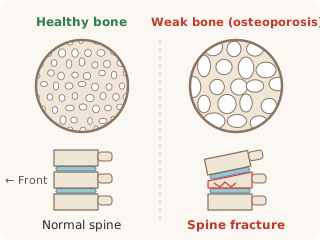
Bone is living tissue, constantly being broken down and rebuilt throughout your life. Osteoporosis develops when bone breakdown outpaces bone rebuilding, leaving bones progressively less dense and more porous — literally, "porous bone," the meaning of the word itself. This process accelerates significantly after menopause, as declining estrogen removes a real, protective effect on bone density, which is why osteoporosis is substantially more common in women than men, particularly after age 50.
For the spine specifically, osteoporosis matters enormously: it is the leading real cause of vertebral compression fractures — a collapse of one of the bones in your spine — which can happen with minimal or no trauma at all in someone with significantly reduced bone density. This article focuses on osteoporosis broadly, with particular attention to its real, direct relationship with spine health.
Normal Bone Physiology: How Healthy Bone Works
Throughout life, two types of cells continuously remodel bone: osteoclasts, which break down old bone tissue, and osteoblasts, which build new bone. In healthy adults, these processes stay roughly balanced. Peak bone mass — the maximum bone density a person achieves — is typically reached by the late 20s to early 30s, after which bone density gradually declines for everyone, at a real, variable rate depending on genetics, hormones, nutrition, and activity level.
Estrogen plays a real, protective role in slowing bone breakdown. When estrogen levels drop sharply at menopause, the balance shifts toward faster bone loss, and this accelerated loss can continue for several years before gradually settling into a slower, ongoing rate of decline.
How Osteoporosis Develops
Osteoporosis develops when the natural, gradual bone loss described above becomes significant enough to meaningfully weaken bone structure. This can happen through:
- Primary osteoporosis — the most common form, related to aging and, in women, menopause-related estrogen decline.
- Secondary osteoporosis — bone loss caused or accelerated by another real, identifiable condition or medication, including long-term steroid use (even at relatively modest doses over years), thyroid disorders (particularly untreated overactive thyroid), certain cancers and their treatments, chronic kidney disease, rheumatoid arthritis, and malabsorption conditions (like celiac disease) affecting calcium and vitamin D absorption from food.
This distinction matters clinically, since real, current guidance recommends checking for secondary causes at diagnosis, particularly in younger patients or those with unusually severe bone loss for their age. A real, typical secondary-cause workup includes blood tests for vitamin D, calcium, kidney function, and thyroid function — a straightforward, real set of tests that can identify a treatable underlying contributor in some patients, changing the treatment approach beyond osteoporosis medication alone.
Risk Factors: Who Gets Osteoporosis, and Why
Real, established risk factors include:
- Age and menopausal status — the single strongest real factors; risk rises substantially after menopause and continues increasing with age.
- Being female — women have a real, significantly higher lifetime risk than men, partly due to naturally lower peak bone mass and the menopausal estrogen decline.
- Family history of osteoporosis or fragility fracture, particularly a parent's hip fracture.
- Low body weight — a genuinely important, real risk factor, since less body weight generally correlates with lower bone density.
- Smoking and heavy alcohol use, both independently associated with reduced bone density.
- Long-term corticosteroid use, one of the most significant real medication-related risk factors.
- Low calcium and vitamin D intake, and limited physical activity, especially weight-bearing exercise, over the years leading up to and following menopause.
- Early menopause or surgical removal of the ovaries, which removes estrogen's protective effect earlier than natural menopause would.
Symptoms: What Osteoporosis Actually Feels Like
Osteoporosis itself is often called a "silent disease" because bone loss produces no symptoms until a fracture occurs. For the spine specifically:
Real, common signs of osteoporosis-related spine problems include:
- A sudden onset of back pain, sometimes after something as minor as bending, coughing, or lifting a light object — a possible sign of a vertebral compression fracture
- Gradual loss of height over the years
- A gradually increasing forward curve of the upper back (sometimes called a "dowager's hump")
- Back pain that worsens with standing or walking and eases with lying down
A real, important point: many vertebral compression fractures cause no dramatic, memorable event at all — some are only discovered incidentally on an X-ray or scan done for another reason.
Diagnosis: How Doctors Confirm Osteoporosis
The real, standard diagnostic test is a DEXA scan (dual-energy X-ray absorptiometry), a low-radiation scan measuring bone density at the hip and lumbar spine. Real, current guidance recommends DEXA screening for all women aged 65 and older, and for younger postmenopausal women with additional real risk factors.
Results are reported as a T-score, comparing your bone density to that of a healthy young adult:
- T-score of -1.0 or higher: normal bone density
- T-score between -1.0 and -2.5: osteopenia (low bone mass, not yet osteoporosis)
- T-score of -2.5 or lower: osteoporosis
For premenopausal women and men under 50, a Z-score (comparing you to others of your own age and sex) is used instead, since T-scores are calibrated for postmenopausal women and older men specifically. A Z-score of −2.0 or lower is 'below the expected range for age'.
A real, important diagnostic point: a fragility fracture (a fracture from a fall from standing height or less, or with no clear trauma at all) matters a great deal. A low-trauma fracture of the hip or spine is enough to diagnose osteoporosis whatever the T-score. A low-trauma fracture of the wrist, upper arm or pelvis does so when the T-score is in the osteopenia range. Your doctor may also calculate your FRAX score, a real, validated tool combining your bone density with other risk factors to estimate your 10-year fracture risk, which helps guide treatment decisions particularly in the osteopenia range where the T-score alone doesn't clearly indicate whether treatment is warranted.
Understanding Your Bone Density Report
Your DEXA report will typically show:
- T-scores at the hip and lumbar spine — your diagnosis is based on the lower (worse) of these two real scores.
- A comparison to your previous scan, if you've had one before — real, meaningful change typically requires scans usually 1–2 years apart, as your doctor advises, given the real limits of DEXA measurement precision.
- Your FRAX 10-year fracture risk percentage, if calculated.
A real, important point your doctor will explain: osteopenia is not automatically treated with medication — it's a real, individual decision based on your overall fracture risk (via FRAX), not the T-score number alone.
Treatment Options
Foundational, real treatment for everyone with osteoporosis or significant risk includes:
- Adequate calcium and vitamin D intake, through diet and, if needed, supplementation — a real, foundational part of any osteoporosis treatment plan. Most adults over 50 need about 1,000–1,200 mg of calcium a day in total from food plus any supplement, and about 800–1,000 IU of vitamin D3 a day. Vitamin D deficiency is very common in India, so get it tested. Take high-dose vitamin D (for example 60,000 IU sachets) only on a doctor's advice, as excess can be harmful. Good Indian calcium sources: milk, curd, paneer, ragi, til (sesame), rajma and other pulses.
- Weight-bearing and resistance exercise, which genuinely helps maintain bone density and — just as importantly — improves balance and muscle strength, directly reducing fall risk.
- Fall prevention measures — addressing home hazards, vision problems, and balance, since preventing the fall itself is just as real and important as strengthening the bone.
- Smoking cessation and moderating alcohol intake.
Medication, when indicated, real, current first-line options include:
- Bisphosphonates (oral, typically for up to 5 years, or intravenous zoledronic acid, typically for up to 3 years) — the most widely prescribed, longest-established real class of osteoporosis medication, working by slowing the cells that break down bone. Take oral alendronate or risedronate on an empty stomach with a full glass of plain water, and stay upright without food for 30–60 minutes. Get a dental check-up before starting. Kidney function is checked first. Rare side effects are jaw-bone problems and unusual thigh fractures; report new thigh or groin pain. All of these medicines are prescription-only — start or stop them only on your doctor's advice.
- Denosumab, an injection given every 6 months, which can improve bone density more quickly than bisphosphonates. Denosumab must be given on time every 6 months and must never be stopped or delayed without a plan from your doctor. Stopping suddenly can cause rapid bone loss and several spine fractures. A bisphosphonate is usually needed afterwards. Drug holidays do not apply to denosumab.
- Parathyroid hormone analogs (like teriparatide), used for up to 2 years in patients at very high fracture risk, which build new bone rather than only slowing bone loss — genuinely a different real mechanism from the other options.
- Romosozumab, a newer option combining bone-building and bone-loss-slowing effects, typically used for one year followed by a bisphosphonate to maintain the gained benefit. Not used in people who have had a heart attack or stroke in the past year.
Bone-building drugs (teriparatide, romosozumab) must be followed by a bisphosphonate or denosumab, or the gain is lost.
Real, current guidance (ASBMR task force and Endocrine Society/AACE 2020) supports longer treatment duration — up to 10 years of oral bisphosphonates or 6 years of intravenous zoledronic acid — specifically for patients at high fracture risk, a real, meaningful update from older, more uniformly time-limited protocols. For patients at lower risk, a "drug holiday" of 2-4 years, with reassessment via repeat DEXA and FRAX, is a real, reasonable option after initial treatment.
Spine-Specific Treatment: Vertebral Compression Fractures
When osteoporosis causes an actual vertebral compression fracture, real treatment typically starts conservatively — pain management, a period of activity modification, and sometimes a brace for comfort and support. Most vertebral compression fractures heal with conservative management over 6-12 weeks. A spine fracture means a very high risk of another fracture soon. Ask for osteoporosis testing and treatment to start promptly, not only pain relief.
For fractures causing persistent, significant pain despite conservative treatment, minimally invasive procedures (vertebroplasty or kyphoplasty, which stabilize the fractured vertebra with a real, injected cement material) are real options your spine surgeon may discuss — though current evidence on their benefit compared to conservative care alone is genuinely mixed, and this is a real, individualized decision to make with your surgeon.
Exercises
Real, evidence-based exercise for osteoporosis focuses on weight-bearing activity, resistance training, and balance work — never high-impact or spine-flexion-heavy movements that could increase fracture risk in significantly low bone density. CARENYX's own reviewed Exercise Library includes directly relevant, appropriately gentle options:
- Balance Exercise and Ankle Mobility — real, evidence-based fall-prevention exercises.
- Wall Sit and Bodyweight Squat — real, appropriate weight-bearing strength exercises.
- Heel Raise and Sit-to-Stand — functional strength and balance combined.
See the full Spine Fitness Hub, particularly the dedicated Elderly section, for the complete, curated collection.
A real, important safety note: high-impact activity, and exercises involving significant spinal flexion (like traditional sit-ups) or twisting under load, are generally avoided in people with confirmed osteoporosis, given real, increased vertebral fracture risk with these specific movement patterns.
Recovery Timeline
Osteoporosis itself is a chronic condition managed on an ongoing basis rather than "recovered from." For an uncomplicated vertebral compression fracture specifically, real, typical healing occurs over 6-12 weeks, with pain gradually improving over that period; some residual height loss at the fractured level is often permanent, even after full healing.
Prevention
Real, evidence-informed prevention measures — most valuable when started well before menopause, though genuinely still worthwhile afterward — include:
- Adequate calcium and vitamin D intake throughout life, particularly through adolescence and young adulthood when peak bone mass is being built.
- Regular weight-bearing exercise throughout life.
- Not smoking, and moderating alcohol intake.
- Discussing bone density screening timing with your doctor, particularly around menopause if you have additional real risk factors.
Living With Osteoporosis Long-Term
Osteoporosis is a real, chronic condition managed over years, not a single problem that gets fixed and finished. For most people, this means an ongoing, real partnership with your doctor — periodic DEXA rescans (typically every 1–2 years, as your doctor advises, given the real limits of measurement precision over shorter intervals), medication review, and continued attention to the foundational, non-medication measures (nutrition, weight-bearing exercise, fall prevention) that remain relevant regardless of what medication you're on.
A real, honest and important point: a diagnosis of osteoporosis, or even a prior vertebral compression fracture, does not mean you should become significantly less active out of fear of another fracture. Real, current evidence consistently shows that appropriate, guided physical activity — not inactivity — is protective, both for bone density itself and for the muscle strength and balance that prevent the falls that cause most fractures in the first place. Working with a physiotherapist familiar with osteoporosis-appropriate exercise selection can help you build genuine confidence in staying active safely, rather than withdrawing from activity more than is actually necessary.
Frequently Asked Questions
Is osteoporosis only a women's condition? No — while women are at substantially higher real risk, particularly after menopause, men develop osteoporosis too, and real screening guidance recommends DEXA for men aged 70 and older, or men aged 50–69 with risk factors.
Can osteoporosis be reversed? Real, current treatment can meaningfully improve bone density and substantially reduce fracture risk, though it's more accurate to describe this as effective management than a complete reversal to the bone density of a young adult.
Do I need to take calcium supplements forever? This is a real, individual decision based on your dietary intake and your doctor's assessment — many people can meet calcium needs through diet alone, particularly with dairy, leafy greens, and fortified foods, without needing indefinite supplementation.
Is it safe to exercise if I already have a compression fracture? Generally yes, once your doctor confirms it's appropriate, though real, specific guidance on which movements to avoid during the healing period matters — this is a real, individualized conversation to have directly with your doctor or physiotherapist.
Why did my doctor recommend a drug holiday from my medication? For patients at lower fracture risk, real, current evidence supports a temporary pause (typically 2-4 years) after an initial treatment course, since bisphosphonates in particular remain in bone tissue and continue offering some protective effect for a time after stopping — this is a real, evidence-based approach, not a sign your treatment failed. A drug holiday does not apply to denosumab, which must never be stopped without a plan from your doctor.
Does osteoporosis cause the "hunched over" posture I've seen in older relatives? Yes, this is a real, direct consequence in some cases — repeated vertebral compression fractures, especially in the upper-mid back, can produce the forward curve sometimes called a dowager's hump, which is exactly why early diagnosis and treatment matter for preventing this specific, visible consequence.
If my mother had osteoporosis, will I definitely get it too? Not definitely, but family history is a real, meaningful risk factor worth discussing with your doctor, particularly regarding when to start bone density screening — this is a real, useful piece of information for your doctor to factor into your own individual risk assessment, not a guarantee of your own future diagnosis.
Myths vs. Facts
Myth: "Osteoporosis is just a normal, untreatable part of getting older." Fact: While bone density naturally declines with age, osteoporosis is a real, diagnosable, treatable condition — not something to simply accept without evaluation.
Myth: "If I don't have any pain, my bones must be fine." Fact: Osteoporosis is genuinely often silent until a fracture occurs — this is exactly why screening based on age and risk factors matters, rather than waiting for symptoms.
Myth: "Calcium supplements alone are enough to treat osteoporosis." Fact: Calcium and vitamin D are a real, foundational part of treatment, but for diagnosed osteoporosis, they are not a substitute for real, evidence-based medication when it's indicated.
Glossary
- DEXA scan — dual-energy X-ray absorptiometry, the standard bone density test.
- T-score — a bone density comparison to a healthy young adult, used for diagnosis.
- Z-score — a bone density comparison to same-age peers, used in premenopausal women and younger men.
- FRAX score — a validated tool estimating 10-year fracture risk.
- Vertebral compression fracture — a collapse of a spinal bone due to weakened bone density.
- Osteopenia — bone density lower than normal but not yet in the osteoporosis range.
References (Vancouver Style)
Reference list reviewed November 2026. Each source links to its PubMed record, the guideline's official page, or a PubMed search for the exact title.
- Camacho PM, Petak SM, Binkley N, et al. American Association of Clinical Endocrinologists/American College of Endocrinology clinical practice guidelines for the diagnosis and treatment of postmenopausal osteoporosis—2020 update. Endocr Pract. 2020;26(Suppl 1):1-46. Link
- Eastell R, Rosen CJ, Black DM, et al. Pharmacological management of osteoporosis in postmenopausal women: an Endocrine Society clinical practice guideline. J Clin Endocrinol Metab. 2019;104(5):1595-1622. Link
- Qaseem A, Hicks LA, Etxeandia-Ikobaltzeta I, et al. Pharmacologic treatment of primary osteoporosis or low bone mass to prevent fractures in adults: a living clinical guideline from the American College of Physicians. Ann Intern Med. 2023;176(2):224-238. Link
- Buchbinder R, Johnston RV, Rischin KJ, et al. Percutaneous vertebroplasty for osteoporotic vertebral compression fracture. Cochrane Database Syst Rev. 2018;4:CD006349. Link
Related Articles
- Degenerative Disc Disease
- Deformity of Spine
- Low Back Pain
- Spine Fitness Hub — see the Elderly section specifically
- 112 Real Neck & Back Pain FAQs
Call to Action
If you're postmenopausal, have additional real risk factors for osteoporosis, or have experienced sudden back pain, talk to CARENYX's spine team about bone density screening and a real, personalized prevention or treatment plan.