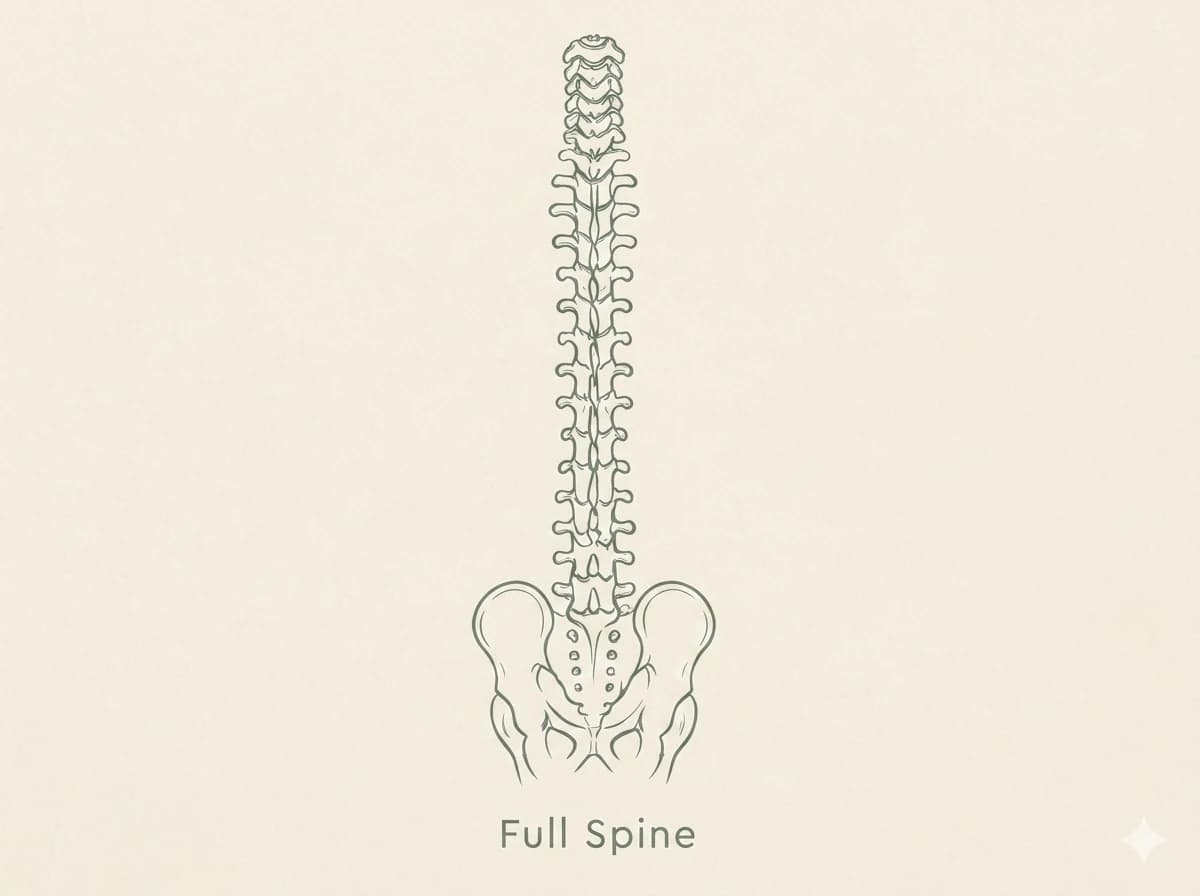
Considering spine surgery? Start by understanding your options.
Understand when spine surgery may be considered, what the different procedures involve, how to prepare and what recovery can look like. Surgery is only one part of spine care — the appropriate treatment depends on your symptoms, examination, imaging and individual circumstances.
CARENYX provides educational health information and does not replace an examination, diagnosis or personalised treatment plan from a qualified medical professional.
Do I Need Spine Surgery?
Surgery may genuinely be considered based on a combination of real, specific factors — never a single one in isolation. These include: the severity of your symptoms, how long they've persisted, the degree of functional limitation they cause, any genuine neurological deficit, progressive weakness, spinal cord or nerve compression confirmed on imaging, spinal instability, structural deformity, and — importantly — how you've responded to appropriate non-operative treatment. Some situations, covered in the Emergency Spine Conditions section below, require urgent assessment regardless of these general factors.
Equally important to state directly: surgery may not be immediately necessary for many patients. Real, current evidence supports a genuine trial of conservative treatment for the large majority of spine conditions before surgery is considered, and many patients improve substantially without ever needing an operation.
This page cannot, and does not attempt to, diagnose whether you personally need surgery. No algorithm or checklist can replace a real, thorough evaluation by a qualified spine surgeon who has examined you, reviewed your imaging, and understood your complete individual history. Whatever your situation, appropriate medical assessment — not a self-assessment tool — is always the right next step.
Emergency Spine Conditions
⚠ The following situations require urgent emergency assessment — go to an emergency department, don't wait for a scheduled appointment:
- Cauda equina syndrome — new loss of bladder or bowel control, saddle numbness, or rapidly progressive leg weakness
- Rapidly progressive neurological weakness of any kind, developing over hours to days
- Severe spinal cord compression with active neurological deterioration
- Major spinal trauma (a significant fall or accident) with any new neurological symptoms
- Other clinically urgent spinal conditions your doctor has specifically flagged as requiring prompt attention
We want to be honest and precise here rather than create false alarm: the large majority of spine symptoms, even significant ones, are not emergencies. These specific situations are genuinely different — they represent a real, time-sensitive risk of permanent neurological damage, where prompt evaluation and sometimes emergency surgery can meaningfully prevent lasting harm. If you're ever uncertain whether your specific symptoms fall into this category, err toward seeking prompt medical evaluation rather than waiting.
The Major Spine Operations
Not every procedure is appropriate for every patient — your surgeon selects the specific approach suited to your individual pathology.
Surgery Comparison
A real, side-by-side comparison — not a ranking of "best" surgery, since the appropriate choice depends entirely on your individual pathology.
| Procedure | Problem Addressed | Hospital Stay | General Recovery |
|---|---|---|---|
| Microdiscectomy | Nerve root compression from a lumbar disc herniation, covered in complete detail in CARENYX's Slip Disc Knowledge Centre. | Often a day surgery or single overnight stay for many patients, genuinely one of the shorter hospital courses among spine procedures. | Walking typically begins the same day; many patients return to desk-based work within 1-2 weeks, with continued gradual improvement over following weeks. |
| Endoscopic Discectomy | Nerve root compression from a lumbar disc herniation, addressed through a genuinely smaller surgical footprint than open or microscope-based approaches. | Often performed as day surgery for appropriately selected patients, genuinely one of the least invasive lumbar procedures. | Many patients experience a genuinely rapid return to light activity, though your specific pace depends on your individual healing and your surgeon's guidance. |
| Lumbar Decompression | Spinal canal narrowing compressing nerve roots, whether from stenosis, disc disease, or a combination of degenerative changes. | Real, typical stay ranges from a day to a few days depending on the extent of decompression needed. | Walking typically begins the same day or day after surgery, with continued improvement in walking distance over following weeks to months. |
| Laminectomy | Central spinal canal narrowing, most commonly from spinal stenosis. | Real, typical stay of one to a few days, depending on the number of levels treated. | Similar real recovery arc to lumbar decompression more generally, with walking capacity often the most notably improved outcome. |
| Foraminotomy | Nerve root compression specifically at the foramen, sometimes from bone spurs or disc material narrowing this specific space. | Often a shorter real hospital course, sometimes day surgery, given the more targeted nature of the procedure. | Generally a genuinely faster initial recovery than more extensive decompression, given the more limited surgical scope. |
| Lumbar Fusion | Spinal instability — abnormal, genuine movement between vertebrae — which decompression alone doesn't address. | Real, typically longer than decompression alone — often several days, given the more extensive procedure. | Real, slower initial recovery than decompression alone, since bony fusion takes months to consolidate, though walking and light activity typically begin early. |
| TLIF (Transforaminal Lumbar Interbody Fusion) | Instability requiring fusion, with the interbody cage providing additional real structural support and helping restore disc height and spinal alignment. | Real, typical stay of several days, similar to lumbar fusion more broadly. | Similar real recovery arc to lumbar fusion, with gradual, guided progression over months as fusion consolidates. |
| PLIF (Posterior Lumbar Interbody Fusion) | Instability requiring fusion, addressed through direct posterior access to the disc space. | Real, typical stay of several days, similar to lumbar fusion more broadly. | Similar real recovery arc to lumbar fusion generally. |
| ALIF (Anterior Lumbar Interbody Fusion) | Instability requiring fusion, with anterior access allowing a larger real interbody cage and more direct disc space preparation without disrupting the back muscles. | Real, typical stay of several days, sometimes involving a combined surgical team given the abdominal approach. | Similar real recovery arc to lumbar fusion generally, with some patients experiencing genuinely less back pain given the muscle-sparing approach. |
| LLIF / XLIF (Lateral Lumbar Interbody Fusion) | Instability requiring fusion, with lateral access allowing a large interbody cage while minimizing disruption to both abdominal structures and back muscles. | Real, often a somewhat shorter stay than traditional open posterior fusion, given the muscle-sparing approach. | Many patients experience genuinely less back pain initially given reduced posterior muscle disruption, though hip or thigh symptoms specific to this approach may take time to resolve. |
| Minimally Invasive Spine Surgery | The same real underlying spinal problems as their open-surgery counterparts, addressed through a genuinely smaller surgical footprint. | Often genuinely shorter than equivalent open procedures, sometimes allowing day surgery where open surgery would require an overnight stay. | Many patients experience a genuinely faster return to light activity, though the overall recovery timeline still depends primarily on the underlying procedure performed, not the approach alone. |
| Navigation-Assisted Spine Surgery | The same real underlying spinal problems as the specific procedure being performed, with navigation supporting precision during that procedure. | Determined by the underlying procedure being performed, not meaningfully changed by navigation assistance itself. | Determined by the underlying procedure — covered in complete detail in this page's dedicated Navigation and Modern Technology section for the real, important context that technology supports but doesn't replace surgical judgment. |
| ACDF (Anterior Cervical Discectomy and Fusion) | Nerve root or spinal cord compression at one or more cervical levels from a herniated disc or associated bone spurs. | Real, typical stay of a day to a few days, depending on the number of levels treated. | Walking begins the same day; many patients return to desk-based work within 1-2 weeks, with continued improvement over following weeks to months. |
| Cervical Disc Replacement | The same real nerve root compression ACDF addresses, with an alternative surgical solution preserving motion. | Similar real hospital course to ACDF — typically a day to a few days. | Similar real initial recovery to ACDF, often with somewhat earlier return to full neck range of motion since no fusion needs to consolidate. |
| Cervical Foraminotomy | Nerve root compression specifically at the foramen, addressed from behind rather than the front of the neck. | Often a shorter real hospital course than fusion procedures, sometimes day surgery. | Generally a genuinely faster initial recovery than fusion-based approaches, given no fusion needs to consolidate. |
| Cervical Laminectomy | Spinal cord compression from cervical canal narrowing, often affecting multiple levels. | Real, typical stay of several days, depending on the extent of decompression. | Similar real recovery pattern to myelopathy surgery generally — pain improves earliest, with hand and balance function improving more gradually over months. |
| Cervical Laminoplasty | Spinal cord compression from multi-level cervical stenosis, addressed while preserving more natural neck movement than laminectomy with fusion. | Real, typical stay of several days, similar to cervical laminectomy. | Similar real recovery pattern to myelopathy surgery generally, often with earlier return to fuller neck range of motion than fusion-based approaches. |
| Cervical Corpectomy | Extensive spinal cord compression requiring more thorough decompression than standard ACDF provides. | Real, typically longer than standard ACDF — often several days, given the more extensive reconstruction involved. | Similar real recovery pattern to ACDF and myelopathy surgery generally, with a somewhat longer initial recovery given the more extensive procedure. |
| Cervical Fusion | Cervical instability, whether from degenerative change, trauma, or as a structural consequence of extensive decompression. | Varies by the specific technique and number of levels — your surgical team gives you a real, individualized expectation. | Real, gradual recovery over months as fusion consolidates, with the specific pace depending on the approach and extent of surgery. |
| Vertebral Augmentation Procedures | Pain and instability from a vertebral compression fracture, without addressing the broader underlying bone health, which requires separate, comprehensive evaluation. | Often performed as day surgery or with a brief overnight stay, genuinely one of the less invasive spine procedures. | Many patients experience relatively rapid pain relief, though comprehensive bone health evaluation and treatment remain genuinely important alongside the procedure itself. |
| Surgery for Spinal Deformity | Structural spinal curvature or malalignment beyond what decompression or standard fusion alone addresses. | Real, typically longer than other spine procedures — often a week or more, given the complexity involved. | Real, longer, more gradual recovery than more limited spine procedures, with your surgical team providing an individualized recovery plan specific to your procedure. |
Minimally Invasive vs. Open Surgery
Minimally invasive surgery uses smaller incisions and specialized instruments, generally involving less muscle disruption, less blood loss, and often a shorter hospital stay and faster initial recovery compared to traditional open surgery, which uses a larger incision providing more direct, open visualization of the surgical field.
Here is a real, important point this page wants to state clearly and directly: minimally invasive is not automatically better for every patient. Some pathologies — particularly more complex, multi-level, or deformity-related conditions — are genuinely better addressed through an open approach, where direct visualization supports more thorough correction. The appropriate approach depends on your specific pathology, anatomy, and your surgeon's individual assessment and experience, not a general assumption that "less invasive" always means "better" for your particular situation.
Your Pre-Surgery Journey
1
Consultation
Your first, real conversation with a spine specialist about your symptoms and concerns.
2
Clinical Examination
A thorough physical and neurological exam assessing your specific symptoms and function.
3
Imaging Review
Your MRI, X-ray, or CT scans are reviewed directly alongside your exam findings.
4
Diagnosis
Your surgeon explains the specific, real cause of your symptoms based on your complete evaluation.
5
Discussion of Treatment Options
A real, honest conversation covering both non-surgical and surgical options relevant to your specific situation.
6
Decision for Surgery If Appropriate
If surgery is genuinely appropriate for your situation, this is discussed as one part of a broader, individualized plan — never presented as the only option without context.
7
Pre-Anaesthetic Assessment
A real, specific evaluation by the anaesthesia team assessing your fitness for anaesthesia and surgery.
8
Investigations
Blood tests and other real, specific pre-operative investigations appropriate to your individual health and planned procedure.
9
Medication Review
A thorough review of your current medications, particularly blood thinners and diabetes medicines, covered in complete detail in the checklist below.
10
Surgical Consent
A real, detailed conversation ensuring you understand your specific procedure, its benefits, and its risks before formally consenting.
11
Hospital Admission
Your formal admission to the hospital, typically on the day of or the day before your scheduled surgery.
12
Surgery
Your procedure itself, covered in complete detail in this page's Day of Surgery section.
Pre-Surgery Checklist
Previous medical conditions
Current medicines
Blood thinners / antiplatelet medicines
Diabetes medicines
Allergies
Previous anaesthesia problems
Previous surgeries
Smoking
Alcohol
Recent infections
Dental problems where relevant
Sleep apnoea where relevant
Assistive devices
Home support
Work requirements
Travel plans
A Real, Important Note About Medication
Do not stop blood thinners, diabetes medicines or any prescribed medication unless instructed by the treating medical team.
This checklist is designed to help you organize the real, relevant information to discuss with your surgical and anaesthesia team — it is not instruction to independently stop or change anything on this list. Your medical team will give you specific, individualized guidance about which medications, if any, need adjustment before your specific surgery, and exactly when.
Questions to Ask Your Spine Surgeon
Questions About a Second Opinion
A second opinion is a normal, reasonable part of informed healthcare decision-making — genuinely useful whenever you're facing a major decision like spine surgery, uncertain about your diagnosis or recommended treatment, or simply want additional confidence before proceeding. Seeking one doesn't undermine your treating surgeon; most surgeons genuinely welcome an informed, confident patient.
Real, useful questions to bring to a second opinion consultation include: What exactly is the diagnosis? What happens if I wait? What are the non-surgical alternatives? Why this particular operation? What are the expected benefits? What are the major risks? Is another surgical approach reasonable for my situation? What happens if surgery is unsuccessful?
CARENYX's own Second Opinion service supports exactly this process, connecting you with additional specialist review of your specific case.
Day of Surgery
Your real, typical day-of-surgery journey generally includes: arrival at the hospital, registration, a pre-operative assessment confirming your fitness for surgery, a final anaesthesia review, confirmation of your surgical consent, transfer to the operating theatre, anaesthesia administration, the surgery itself, time in the recovery room as anaesthesia wears off, transfer to your hospital ward, early mobilisation (often walking the same day for many procedures), pain management, and ongoing monitoring by the nursing and surgical team.
We want to state directly that exact processes genuinely vary by hospital and by the specific operation being performed — this is a real, general outline, not a fixed protocol identical for every patient. Your specific surgical team will walk you through the exact sequence for your particular procedure and hospital.
Anaesthesia
Most spine surgery uses general anaesthesia, where you're fully asleep throughout the procedure. Some specific procedures may use regional or local anaesthesia, numbing only the surgical area while you remain conscious or lightly sedated — your anaesthetist determines what's appropriate for your specific procedure.
The anaesthetist's role is genuinely significant — they assess your fitness for anaesthesia beforehand, manage your anaesthesia throughout surgery, and monitor your recovery immediately afterward. A pre-anaesthetic assessment, covered in the Pre-Surgery Journey section above, reviews your medical history and any specific real, individual risk factors relevant to your anaesthesia.
Real, common short-term effects after general anaesthesia include nausea, a sore throat (from the breathing tube used during surgery), drowsiness, and some pain as the anaesthesia wears off — these are generally expected and typically resolve within hours to a day or two.
This page describes general anaesthesia concepts — it does not provide personalised anaesthesia advice for your specific situation, which is always a conversation to have directly with your anaesthetist. If you experience severe or unusual symptoms after anaesthesia — significant difficulty breathing, chest pain, or severe, unusual reactions — this requires urgent attention from your medical team.
Risks of Spine Surgery
We want to be honest and direct here: all surgery carries real risk, and spine surgery is no exception. Risks genuinely vary by the specific procedure being performed and by your individual health profile — this section describes general categories, not a universal risk level applicable to every patient or every operation.
Real, general risk categories relevant across spine surgery include: infection, bleeding, blood clots (including deep vein thrombosis), anaesthesia complications, nerve injury, spinal cord injury (relevant for cervical and more extensive procedures), dural tear or cerebrospinal fluid leak, persistent pain despite technically successful surgery, recurrent disc herniation at the same level, failure to improve as hoped, adjacent-segment degeneration over time (particularly after fusion), non-union or pseudarthrosis (failure to achieve solid fusion), implant-related complications, and the potential need for future revision surgery.
A genuinely important, honest point: this page deliberately does not provide a single, universal percentage for these risks, since real, published rates vary considerably by specific procedure, patient population, and surgical technique. Where your surgeon discusses specific numerical risk rates with you, ask directly what source and patient population those numbers come from — real, high-quality evidence identifies this context rather than presenting a number in isolation.
After Surgery
Timelines differ substantially according to the operation — this reflects a real, general range across procedure types.
Pain
Managed directly by your surgical team in the recovery room as anaesthesia wears off, using appropriate pain medication.
Walking
For many procedures, walking with assistance may begin within hours; more extensive surgery may need a longer initial period before mobilising.
Wound Care
Your surgical team manages your dressing during this immediate period.
Sleeping
Position guidance from your nursing team, particularly for comfort with any dressing or drains.
Sitting
Brief, supported sitting as tolerated, guided by your nursing team.
Stairs
Not applicable at this stage.
Driving
Not applicable.
Office Work
Not applicable.
Household
Not applicable.
Exercise
Only the assisted mobilisation described above, where appropriate for your specific procedure.
Physiotherapy
May begin very early for some procedures, guided directly by your surgical team.
Travel
Not applicable.
Follow-Up
Your surgical team confirms your specific follow-up schedule before you leave hospital.
When to Seek Help After Surgery
⚠ Contact your surgical team promptly, or seek emergency care depending on severity, if you experience:
- New or worsening weakness
- New bowel or bladder dysfunction
- Severe new numbness
- Fever
- Wound discharge
- Increasing redness or swelling around your wound
- Severe, uncontrolled pain despite your prescribed medication
- Shortness of breath
- Chest pain
- Calf swelling or pain
We want to be direct and honest, not falsely reassuring: some of these signs — particularly new bowel or bladder dysfunction, sudden severe weakness, chest pain, or shortness of breath — warrant emergency care immediately, not a call scheduled for the next business day. Others, like mild wound redness or manageable pain slightly above what you expected, are genuinely appropriate to discuss with your surgical team promptly but don't necessarily require an emergency room visit. If you're ever uncertain which category your specific symptom falls into, contacting your surgical team directly for guidance is always the reasonable, safe choice.
Recovery and Rehabilitation
Real, comprehensive recovery extends well beyond the immediate post-operative period, genuinely encompassing walking, guided physiotherapy, core conditioning, strength recovery, flexibility work, a gradual, appropriately paced return to activity, adequate sleep, good nutrition, healthy weight management, smoking cessation, and attention to your mental wellbeing throughout what can be a genuinely challenging period.
Real, current evidence supports an active, engaged approach to rehabilitation rather than passive waiting — your specific rehabilitation plan, guided by your surgeon and physiotherapist, directly supports your return to normal activity.
Explore CARENYX Spine Recovery for real, structured post-surgical guidance, CARENYX Fit for your ongoing exercise and fitness needs, and CARENYX Nutrition+ for evidence-based nutritional support throughout your recovery.
Return to Work
Desk Job
Often among the earliest occupations patients return to, sometimes within 1-2 weeks for less extensive procedures, though this varies by your specific surgery, pain level, and how comfortably you can sit and move throughout the day.
Standing Job
Generally needs somewhat more recovery time than desk-based work, given the sustained standing and movement demands — your surgeon and physiotherapist assess your specific readiness.
Light Physical Work
Timing depends significantly on your specific procedure and the exact physical demands of your role — a real, individual conversation with your surgical team based on your actual job tasks.
Heavy Manual Work
Typically needs the longest recovery period among occupational categories, particularly after fusion surgery, given the significant lifting, bending, and physical demands involved — your surgeon determines specific readiness based on your healing and functional capacity.
Driving Occupation
Requires both general driving clearance (covered in the Return to Driving section) and consideration of the specific physical demands and duration of your driving role.
Healthcare Worker
Often involves significant physical demands — patient handling, prolonged standing, and variable shifts — genuinely important to discuss specifically with your surgeon given your particular clinical duties.
Athlete
Requires a real, structured, gradual return-to-sport progression beyond simply returning to work — covered in complete detail in this page's Return to Fitness and Sports section.
Why There's No Single Universal Return-to-Work Date
Return-to-work timing genuinely depends on several real, individual factors together: your specific surgery, your neurological status, your current pain level, your specific job's physical demands, your individual recovery pace, and your surgeon's and physiotherapist's direct assessment of your readiness. This page deliberately does not provide a single, universal return-to-work date, since doing so would genuinely mislead patients whose circumstances differ from any single average.
Return to Driving and Travel
Driving
Several real, specific factors determine when driving is genuinely safe again: adequate pain control, normal reaction time (particularly important given many pain medications affect alertness), the ability to sit comfortably for the duration of a typical drive, and — genuinely important — the ability to perform an emergency brake maneuver without hesitation or significant pain. Your surgeon's specific clearance, based on your individual healing and function, matters more than a fixed calendar date.
Travel
Short local travel is often reasonable earlier in recovery than longer-distance travel; flights specifically involve prolonged sitting and reduced movement, genuinely worth discussing with your surgeon before longer trips. Practical measures — walking periodically during longer travel, avoiding heavy luggage lifting, and following any specific post-operative precautions your surgeon has given you — support a more comfortable travel experience during recovery.
As throughout this page, we deliberately avoid a single, universal timeline for driving or travel clearance, since your specific procedure and individual recovery are what genuinely determine safe timing — always confirmed directly by your surgeon.
Return to Fitness and Sports
Real, appropriate progression after spine surgery generally moves through stages: walking first, then general mobility work, low-load exercise, progressive strength work, resistance training, and — for appropriately cleared patients — higher-intensity activity and eventually sport-specific training.
This progression genuinely must be gradual — attempting to skip stages or return to full intensity too quickly increases real risk of setback or re-injury, particularly relevant after fusion surgery where the fused level needs time to fully consolidate before handling higher-demand loads.
Explore CARENYX Fit and the Exercise Library for real, reviewed exercise resources to support this progression, always alongside your surgeon's and physiotherapist's individual clearance at each stage.
Nutrition After Surgery
Real, general nutritional principles genuinely support surgical recovery: adequate protein (supporting tissue healing), adequate overall calories (avoiding unintentional weight loss during a demanding recovery period), fibre (particularly relevant given reduced activity and some pain medications can affect digestion), good hydration, adequate micronutrients, maintaining a healthy weight, supporting bone health (particularly relevant if fusion is part of your procedure), and avoiding smoking, which genuinely impairs healing and fusion specifically.
This page describes general nutritional principles — it does not prescribe specific supplements or therapeutic diets for your individual situation, which depends on your specific health profile and is best discussed with your doctor or a nutrition professional.
Explore CARENYX Nutrition+ for real, evidence-based nutritional tools supporting your recovery.
Recurrence and Long-Term Spine Health
Recurrence means your original problem — or a related one — genuinely returns, either at the same spinal level or, more commonly discussed as "adjacent-segment degeneration," at a neighboring level. A disc herniation can recur at the same level after discectomy; degenerative changes can develop at levels next to a fusion over time.
Here is a real, important point worth stating directly: surgery does not make your entire spine permanently disease-proof. Surgery addresses the specific, real problem it was designed to treat at a specific level — the rest of your spine remains subject to the same real, ongoing aging and degenerative processes as anyone else's, sometimes with somewhat altered mechanics at levels adjacent to a fusion.
This is exactly why long-term spine health genuinely matters even after successful surgery: maintaining fitness, strength, a healthy weight, good ergonomics, regular walking, and not smoking all support your spine's ongoing resilience, whether or not you've had surgery.
Recovery After Different Operations
Microdiscectomy
General Principles
Among the fastest-recovering spine procedures — walking begins the same day, with many patients returning to desk-based work within 1-2 weeks.
Activity Progression
Gradual increase in walking distance, followed by core-focused physiotherapy once your surgeon confirms you're ready, then gradual return to fuller activity over following weeks.
What Differs
No fusion means no bony healing to wait for — recovery is primarily about soft-tissue healing and rebuilding confidence and strength, genuinely faster than fusion-based procedures.
Discuss With Your Surgeon
Your specific timeline for returning to bending, lifting, and any sport or physically demanding activity relevant to your life.
Endoscopic Discectomy
General Principles
Often an even faster initial recovery than standard microdiscectomy, given the smaller surgical footprint, though the underlying healing principles are similar.
Activity Progression
Similar progression to microdiscectomy, often with a somewhat faster initial pace for light activity given reduced tissue disruption.
What Differs
The genuinely smaller incision and reduced muscle disruption compared to microdiscectomy, though your surgeon determines whether this specific technique was appropriate for your particular herniation.
Discuss With Your Surgeon
Whether your specific technique allows any earlier return to activity than a standard microdiscectomy would.
Lumbar Decompression
General Principles
Recovery pace depends significantly on how extensive your specific decompression was — single-level decompression recovers faster than multi-level.
Activity Progression
Walking begins early, with gradual increase in distance as your primary early goal, followed by broader activity as comfort allows.
What Differs
Without fusion, recovery is generally faster than combined decompression-and-fusion procedures, though genuinely slower than the more limited microdiscectomy given typically more extensive bone and ligament removal.
Discuss With Your Surgeon
Whether your specific decompression addressed genuine instability, and if fusion might still be needed if symptoms don't fully resolve.
Lumbar Fusion
General Principles
A genuinely longer, more gradual recovery than decompression alone, since bony fusion takes months to fully consolidate.
Activity Progression
Early walking and light activity, followed by a longer period of activity restriction (particularly bending, lifting, and twisting) while fusion consolidates, then gradual return to fuller activity guided by follow-up imaging.
What Differs
The genuine need to protect the fusing level from excessive stress during the months it takes bone to solidly fuse — a real, important difference from non-fusion procedures.
Discuss With Your Surgeon
Your specific fusion's expected consolidation timeline and what follow-up imaging will be used to confirm solid healing before clearing higher-demand activity.
ACDF
General Principles
Generally a genuinely faster recovery than lumbar fusion, given the smaller surgical area, though still following fusion-based principles.
Activity Progression
Walking begins immediately; neck movement gradually increases as comfort allows, with fusion consolidation followed over months via imaging.
What Differs
The anterior neck approach carries specific, real considerations around swallowing or voice changes (typically temporary) distinct from lumbar procedures.
Discuss With Your Surgeon
Any specific neck movement restrictions during early recovery and when fuller range of motion can safely resume.
Cervical Disc Replacement
General Principles
Similar initial recovery to ACDF, often with somewhat earlier return to fuller neck range of motion since no fusion needs to consolidate.
Activity Progression
Similar early progression to ACDF, with your surgeon guiding when fuller neck movement and more demanding activity are appropriate.
What Differs
Motion is genuinely preserved at the treated level rather than eliminated, which is the defining real difference from ACDF.
Discuss With Your Surgeon
Whether your specific device and procedure have any activity considerations distinct from a fusion-based approach.
Cervical Decompression
General Principles
Recovery pattern often follows the broader myelopathy recovery pattern where relevant — pain typically improves earliest, with hand coordination and balance improving more gradually over months.
Activity Progression
Early walking and light activity, with physiotherapy addressing the specific functional areas — balance, hand coordination — most relevant to your particular symptoms.
What Differs
When performed for myelopathy specifically, recovery genuinely involves nerve and spinal cord tissue healing at its own, often slower biological pace, distinct from purely mechanical healing.
Discuss With Your Surgeon
Realistic expectations for your specific neurological recovery pattern, given your pre-surgical severity and duration of symptoms.
43 Myths vs Facts
Myth
Spine surgery always fails.
Fact
Real, published outcome data shows good-to-excellent results for the large majority of appropriately selected patients across most common procedures.
Myth
Once you have surgery, you can never exercise again.
Fact
Appropriately guided, gradually progressed exercise is genuinely part of recovery and long-term spine health after most spine surgery.
Myth
Fusion means you can never bend again.
Fact
Fusion eliminates motion only at the specific treated level — the rest of your spine retains its normal, real range of motion.
Myth
Minimally invasive surgery is always better than open surgery.
Fact
The appropriate approach depends on your specific pathology; some conditions are genuinely better addressed through an open approach.
Myth
A large incision means the surgery was poorly done.
Fact
Incision size reflects the surgical approach needed for your specific pathology, not the quality or skill of the surgery.
Myth
More implants mean a better surgery.
Fact
The appropriate amount of instrumentation depends entirely on your specific pathology — more isn't inherently better.
Myth
Everyone with a slipped disc needs surgery.
Fact
The large majority of people with a disc herniation improve with conservative treatment alone; surgery is reserved for a smaller group with specific indications.
Myth
Pain after surgery means something went wrong.
Fact
Some real, expected post-surgical pain is normal and generally improves over days to weeks as part of typical healing.
Myth
Once operated, your spine can never have another problem.
Fact
Surgery addresses the specific problem it was designed to treat — the rest of your spine remains subject to ongoing aging and degenerative processes.
Myth
Surgery always provides complete, permanent symptom relief.
Fact
Real, published outcomes show meaningful improvement for most appropriately selected patients, but complete resolution of every symptom isn't guaranteed for everyone.
Myth
You should try surgery first before conservative treatment.
Fact
Real, current guidance favors a genuine trial of appropriate conservative treatment first for the large majority of spine conditions, except in emergency situations.
Myth
Robotic or navigation-assisted surgery guarantees a better outcome.
Fact
These are real, genuine tools supporting surgical precision — they don't replace clinical judgement or surgical skill as the primary determinant of outcome.
Myth
Younger patients always recover faster than older patients.
Fact
Recovery pace depends on many real, individual factors — overall health and the specific procedure matter more than age alone.
Myth
You'll definitely need a second surgery eventually.
Fact
Many patients never need additional spine surgery after their initial procedure; recurrence and adjacent-segment issues are real possibilities, not certainties.
Myth
Second opinions are disloyal to your surgeon.
Fact
A second opinion is a normal, reasonable part of informed healthcare decision-making that most surgeons genuinely welcome.
Myth
All spine surgery requires general anaesthesia.
Fact
Some specific procedures may use regional or local anaesthesia — your anaesthetist determines what's appropriate for your specific case.
Myth
You can drive yourself home the day of surgery.
Fact
Given anaesthesia's real, lingering effects, you'll genuinely need someone else to drive you home after surgery.
Myth
Walking soon after surgery is dangerous.
Fact
Early, appropriately guided mobilisation is genuinely part of standard, evidence-based post-surgical care for most procedures.
Myth
Physiotherapy is optional after spine surgery.
Fact
Guided physiotherapy genuinely improves real, long-term functional outcomes for most spine surgery patients.
Myth
You should stop your blood thinners on your own before surgery.
Fact
Medication decisions before surgery must always be made by your treating medical team — never stop or change medication independently.
Myth
Spine surgery is always a last resort with no other choice.
Fact
For some specific, urgent situations, surgery is genuinely the appropriate first-line treatment — the right timing depends on your individual clinical picture.
Myth
A fusion will definitely fail if you're a smoker.
Fact
Smoking genuinely increases real risk of non-union, but doesn't guarantee failure — quitting before and after surgery meaningfully improves your odds.
Myth
You need to stay in bed for weeks after spine surgery.
Fact
Real, current guidance favors early, appropriately guided mobilisation over prolonged bed rest for the large majority of procedures.
Myth
Endoscopic surgery is experimental and unproven.
Fact
Endoscopic spine techniques are genuinely well-established, evidence-supported approaches for appropriately selected patients, not experimental.
Myth
All spine surgeons perform the same operations the same way.
Fact
Real, legitimate variation exists in surgical approach and technique between skilled surgeons — this is why understanding your surgeon's specific reasoning matters.
Myth
You'll need the exact same recovery timeline as someone else who had the same surgery.
Fact
Individual recovery pace genuinely varies based on your specific health, procedure extent, and adherence to guidance, even for the same named procedure.
Myth
Cervical disc replacement is always better than ACDF.
Fact
Both are real, evidence-supported options — your surgeon recommends the approach best suited to your specific anatomy and pathology.
Myth
If your surgeon recommends surgery, you have no other option.
Fact
You always genuinely have the right to seek a second opinion, ask about alternatives, and make an informed, individual decision.
Myth
Spine surgery is riskier than most other types of surgery.
Fact
Real, published complication rates for common spine procedures are generally comparable to other major surgeries for appropriately selected patients.
Myth
You can return to full activity as soon as your pain is gone.
Fact
Pain relief and structural healing (particularly bony fusion) follow different, genuinely separate timelines — your surgeon's clearance matters more than pain alone.
Myth
Implants set off metal detectors and cause travel problems.
Fact
Modern spinal implants are generally compatible with air travel; carrying documentation of your surgery is a reasonable, practical precaution if concerned.
Myth
Weight doesn't matter for spine surgery outcomes.
Fact
Maintaining a healthy weight genuinely supports better surgical outcomes and reduces mechanical stress on your spine long-term.
Myth
You should avoid all pain medication after surgery to prove you're tough.
Fact
Appropriate pain management genuinely supports your ability to mobilise and participate in early recovery — it's a real, sensible part of your care, not something to avoid.
Myth
MIS techniques mean no real surgery risk at all.
Fact
Minimally invasive techniques generally reduce certain risks but don't eliminate the fundamental risk categories associated with any spine surgery.
Myth
Every patient needs a spinal fusion if they need any spine surgery.
Fact
Many spine surgeries — microdiscectomy, decompression, foraminotomy — don't involve fusion at all, reserved specifically for genuine instability.
Myth
You can tell how successful surgery was immediately afterward.
Fact
Real, meaningful recovery, especially for nerve-related symptoms, often develops gradually over weeks to months, not immediately.
Myth
A surgeon who uses more advanced technology is automatically more skilled.
Fact
Technology is a genuine, useful tool, but surgical experience, judgment, and outcomes track record matter more than technology alone.
Myth
Once you've had spine surgery, insurance will always cover any future spine issue automatically.
Fact
Insurance coverage genuinely varies by policy and specific circumstances — confirming coverage directly with your insurer for any new issue remains important.
Myth
You should hide your smoking or drinking habits from your surgical team.
Fact
Being honest about these habits helps your team genuinely plan your safest possible anaesthesia and surgery — concealing them increases real risk.
Myth
Deformity surgery and standard fusion are basically the same thing.
Fact
Deformity surgery is genuinely a more extensive, individualized category of surgery, often involving more levels and combined approaches than standard fusion.
Myth
You don't need follow-up appointments if you feel completely fine.
Fact
Real, scheduled follow-up — including imaging for fusion patients — helps confirm your healing is genuinely on track, even without symptoms.
Myth
Vertebral augmentation (like kyphoplasty) fixes your underlying osteoporosis.
Fact
It treats the specific fracture; the underlying bone health requires separate, comprehensive evaluation and treatment.
Myth
All spine surgery outcomes are essentially guaranteed if you follow instructions perfectly.
Fact
Following guidance genuinely supports better odds, but no surgery can honestly guarantee a specific outcome for any individual patient.
103 Frequently Asked Questions
Showing 103 of 103 questions.
Surgery Preparation Tool
About This Preparation Checklist
This is a real, educational preparation checklist designed to help you organize your own readiness and identify anything you still want to discuss with your surgical team.
We want to state this directly and clearly: this checklist is not, and does not act as, legal surgical consent. Formal surgical consent is a separate, specific process conducted directly with your surgical team, involving a detailed discussion of your specific procedure, benefits, and risks. Nothing you check here has any legal or medical standing — it exists purely to help you feel genuinely prepared for that real conversation.
0 of 12 checked. Nothing you check here is sent to any server.
Related CARENYX Content
References
- 1. North American Spine Society (NASS). Evidence-Based Clinical Guidelines for Multidisciplinary Spine Care.
- 2. AOSpine. Clinical guidance on cervical and lumbar spine surgery.
- 3. American Academy of Orthopaedic Surgeons (AAOS). Spine surgery patient education resources.
- 4. NICE. Low back pain and sciatica in over 16s: assessment and management.
- 5. Journal of Neurosurgery: Spine — peer-reviewed outcome data across lumbar and cervical procedures.
- 6. The Spine Journal — peer-reviewed systematic reviews on minimally invasive versus open techniques.
- 7. CARENYX Knowledge Library and Knowledge Centres — real, already-reviewed facts on individual procedures (microdiscectomy, ACDF, decompression, fusion) reused directly for consistency across the CARENYX Spine ecosystem.